
Does Your AP Culture Training for Store Associates Really Matter? Here’s the Truth

Let’s be honest for a second. Most "AP culture" training is just a fancy way of saying "we made everyone sign a document they didn't read so the legal team can sleep at night."
You know the drill. You spend thousands on a comprehensive retail asset protection training program, print out 40-page binders, and send out a mass email. Then, three months later, shrink is up, safety incidents are rising, and your frontline associates still think "Asset Protection" is just the guy in the black polo staring at the security monitors.
Here’s the truth: If your training isn’t changing behavior on the floor, it doesn’t matter. At all.
It’s time to stop the compliance theater and start building a culture that actually works in the real world.
Chapter 1: The Great Disconnect
There is a massive gap between the boardroom and the sales floor. In the boardroom, AP is about "mitigating risk" and "optimizing inventory accuracy." On the floor, AP is "that annoying thing I have to do before I can go on my break."
Your associates are busy. They are dealing with grumpy customers, messy aisles, and the constant vibration of a smartphone in their pocket. They don't have time for broad abstractions. They need to know what to do right now to stay safe and keep the store profitable.
If your loss prevention training feels like a chore, they will tune it out. If it feels like an essential tool for their own success and safety, they’ll pay attention.
Chapter 2: Why Your Training is Failing (And How to Fix It)
Most training fails because it's boring, legalistic, and way too long. We’ve seen it a thousand times: a grainy, 20-minute video from 2012 that features a guy in a suit talking about "corporate integrity."
Cut the fluff. Your associates aren't watching that. They’re checking their Instagram.
Stop the "One-Size-Fits-All" Nonsense
Your store in downtown Chicago has different challenges than your store in suburban Ohio. Stop sending the same generic training to every location and expecting the same results.
Kill the Binders
If your training lives in a dusty binder in a dingy breakroom, it’s already dead. Information needs to be accessible, bite-sized, and digital.

Chapter 3: The Power of Video-First AP Culture
You want to build a real AP culture? Meet your associates where they are. And where they are is on their phones, watching short, engaging video content.
This isn’t just a "nice to have." It’s a requirement for a modern workforce. At Blue Plate Production, we specialize in transforming dry one-pagers into clear training videos that people actually want to watch.
Why video works for AP culture:
- Consistency: Every associate across 500 locations gets the exact same message, delivered with the same tone.
- Retention: People remember 10% of what they read but 95% of what they see in a video.
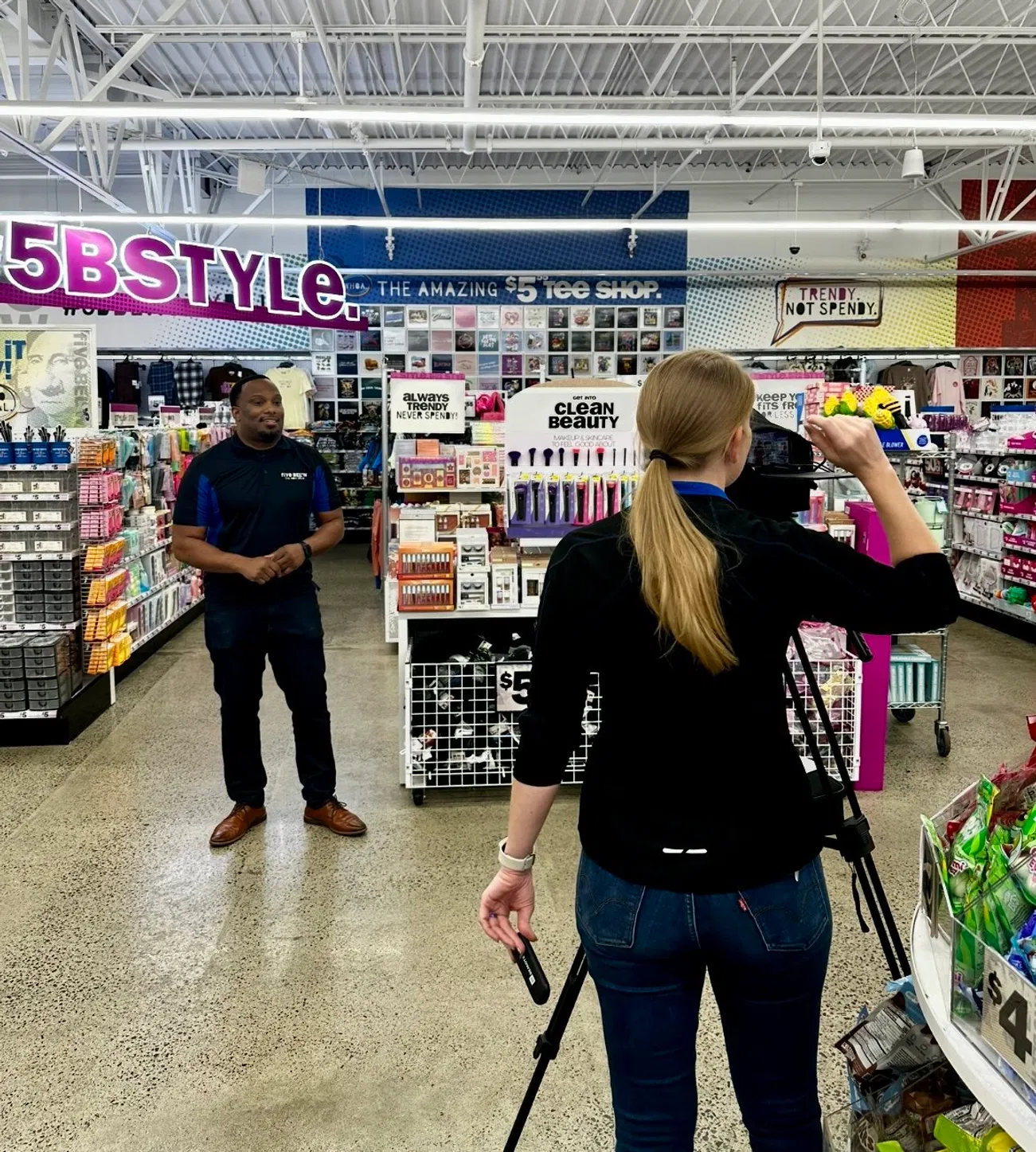
- Humanity: You can use real faces, real store environments, and real scenarios. It makes the "culture" feel tangible, not theoretical.
If you're still relying on text-heavy modules, check out our guide on 5 reasons your retail training videos aren't working.
Chapter 4: Meet the "Frontline Defender"
A true AP culture doesn't just teach people how to spot a shoplifter. It creates "Frontline Defenders." These are associates who understand that protecting the store is a shared responsibility that benefits everyone.

When you invest in AP culture training for store associates, you are training them in three key areas:
- Awareness: The ability to spot suspicious patterns without being confrontational.
- Safety: Knowing how to handle a situation without putting themselves or customers at risk.
- Accuracy: Understanding that a missed scan at the register is just as much of a "loss" as a stolen item.
This isn't about turning your cashiers into security guards. It’s about turning them into proactive owners of their workspace.
Chapter 5: How to Build Your Program Today
Ready to stop the madness? Follow these steps to overhaul your training videos for asset protection teams:
- Audit the Garbage: Go through your current training materials. If it’s longer than three minutes, trim the fat. If it’s full of jargon, rewrite it in plain English.
- Focus on Micro-Outcomes: Don’t try to teach everything at once. Create one 60-second video about "The Power of the Greeting" and another about "Identifying Ticket Switching."
- Make it Visual: Use infographics and clean, modern visuals. Avoid the "stock photo" look, it screams "corporate and out of touch."
- Update the Cadence: Training shouldn't be a once-a-year event. It should be a constant rhythm. Send a fresh, 30-second tip every Tuesday morning.
The Bottom Line: Does it Matter?
Yes, AP culture matters: but only if it's real.
A strong culture reduces shrink, increases safety, and makes your stores a better place to work. But you can't "mandate" a culture into existence through a PDF. You have to build it through consistent, engaging, and human-centered communication.
Stop settling for compliance theater. It’s time to give your frontline teams the tools they actually need to succeed.
Want to see how we turn boring policies into high-impact training? Check out how total retail loss matters or learn about the 7 common mistakes you’re probably making right now.
Or better yet, reach out to us. Let’s get your training off the paper and onto the screen.